What do we call it when we get older?
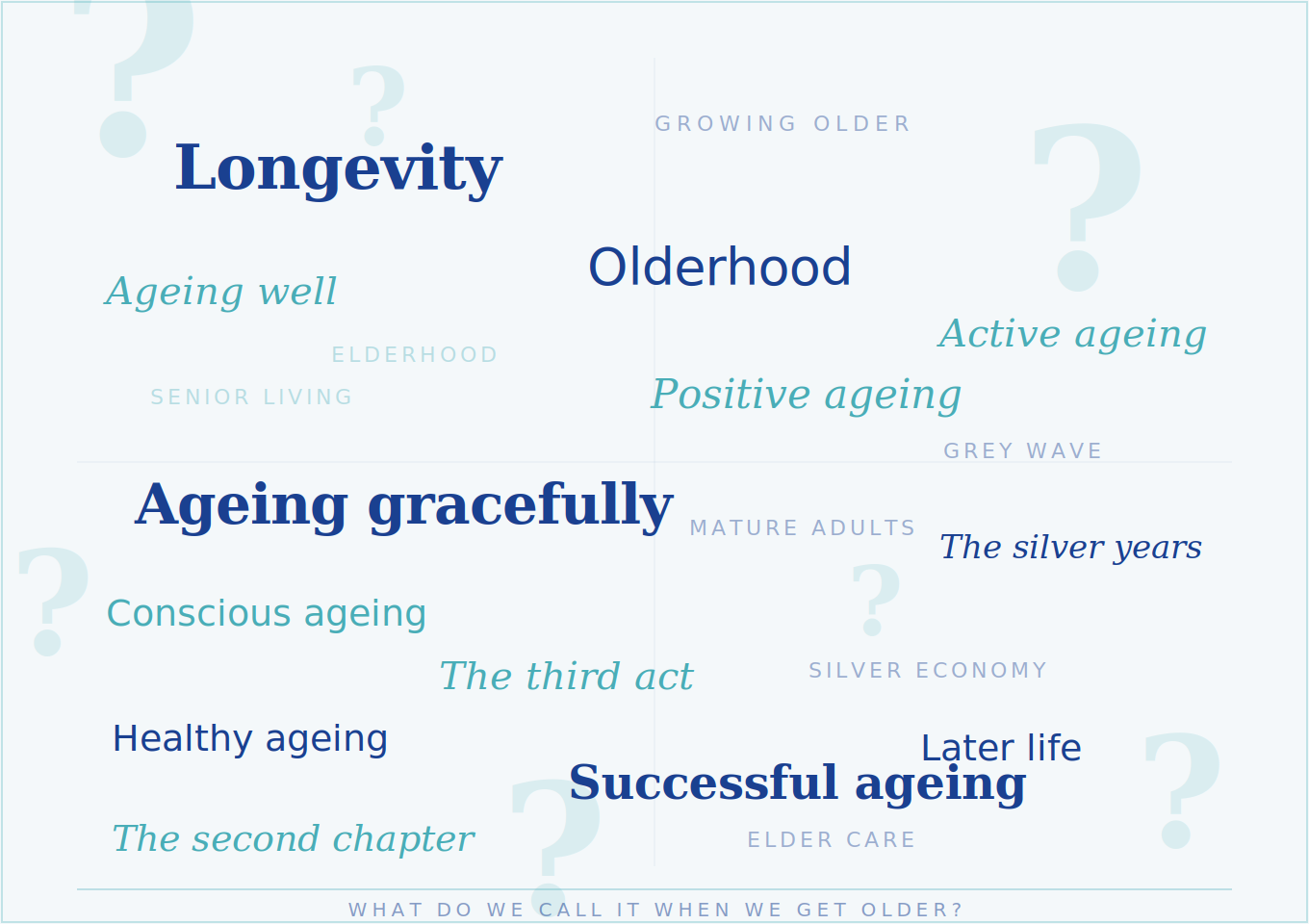
The words we use to talk about ageing reveal just how much we still struggle with it.
We’ve never had so many ways to talk about growing older. And yet, somehow, not one of them feels completely right. That’s not a coincidence.
The explosion of new vocabulary around ageing over the past decade tells a story ; we know the old words, elderly, pensioner, old age, carry baggage we’d rather leave behind. They whisper of decline, dependency and diminishment. So we’ve been reaching for new ones.
Longevity is having a big moment. It sounds scientific, almost aspirational, the domain of biohackers, supplements and centenarian studies. (it almost feels like living to 100 is a project with KPIs!). Positive ageing and ageing well borrow the language of wellness culture, turning growing older into something to optimise and perform. Conscious ageing asks us to be intentional about it. Olderhood, a term gaining real traction, tries to give this phase of life its own proud identity, like childhood or adulthood. There is the third act, the second chapter, the silver years (which come with its own economy), the grey wave….
We’re clearly trying. Hard.
But here’s the thing. Look closely at most of these phrases and you’ll notice they’re all quietly running away from something. Each of these phrases are still defined in opposition to something negative. It seems like it’s about winning a battle rather than simply living a life.
We haven’t yet found language that just accepts…growing older. As normal. As full. As worthy. It’s like we’re still a little bit ashamed of the whole thing.
And that matters more than it might seem.
Language shapes how we think and feel and how we treat each other. When every available term is either a euphemism, an aspiration, or a battle cry, we send a quiet but consistent message : growing older is a problem to be managed, not a life to be lived.
We’re getting better at this conversation. Slowly, genuinely but not yet freely.
At Bluceira we sit with this tension every day. We believe growing older deserves language that’s honest, warm, and free of shame. We haven’t cracked it yet and may never will. But we keep looking.
And honestly? The conversation itself is a pretty good place to start.
What words feel right to you when you think about your own ageing? We’d love to hear from you.


Do before-and-after photos really capture transformation?
Social Media loves a good before-and-after demo! We think the most important one is often invisible. We often talk about [...]
Read More... from Do before-and-after photos really capture transformation?